In the high-stakes world of international trade, where billions hinge on the stroke of a pen, Costco -America’s bulk-buying behemoth—has thrown down the gauntlet.
On November 28, the retailer filed a bombshell lawsuit in the U.S. Court of International Trade, demanding a “full refund” of tariffs paid under President Donald Trump’s sweeping 2025 trade policies.
Could a simple lawsuit trigger a global financial collapse??
This isn’t just a corporate grievance over import duties on tires, golf balls, mangoes, and salmon; it’s a potential detonator for a cascade of legal challenges that could unravel the Trump Administration’s economic agenda, drain federal coffers, and plunge global markets into unprecedented turmoil. As dozens of other firms pile on similar suits, Costco’s action risks tipping an already fragile economy toward collapse.
The Tariff Tempest: Trump’s “Liberation Day” Gamble
To understand the stakes, rewind to April 2, 2025—dubbed “Liberation Day” by the White House. President Trump, invoking the International Emergency Economic Powers Act (IEEPA) of 1977, declared the U.S. trade deficit a “national emergency” and unleashed a barrage of tariffs: a baseline 10% on imports from all countries, escalating to 11–50% for 57 major trading partners, including steep hikes on China (up to 60%), Canada, Mexico, and the EU.
Trump’s goal? Force reciprocity, reshore manufacturing, and fund tax cuts with an estimated $3.8 trillion in revenue over a decade.
But the rollout was chaos incarnate. Markets cratered immediately: The S&P 500 plunged 3.9% in after-hours trading, wiping $2.5 trillion off Wall Street in days, as investors fled to safe havens like gold (hitting $2,895 per ounce) and the yen. Global indices followed suit—Asia’s Nikkei dropped 4.7%, Europe’s FTSE 100 shed 5.2%—evoking memories of the 2008 crash and 2020 COVID meltdown. Retaliation was swift: China slapped 34% duties on U.S. goods, while the EU mulled its “anti-coercion instrument.
A tit-for-tat trade war with China quickly ensued, sending Chinese tariffs over 100%. While the markets then calmed, and rallied over the summer as country after country lined up to make trade deals with Trump, SCOTUS & now Costco threaten to trigger a new detonation throughout global markets.
Costco Enters the Fray: A Lawsuit with Teeth
Enter Costco, the $275 billion revenue juggernaut whose shelves brim with imported essentials. The retailer has shelled out millions in IEEPA duties since February, when Trump first targeted “fentanyl” and “reciprocal” tariffs on Canada, Mexico, and China.
But with lower courts already deeming the tariffs unlawful—ruling IEEPA doesn’t authorize presidential tariff-setting—and the Supreme Court hearing arguments on November 5, Costco smelled blood.
Even Justices appointed by President Trump himself grilled administration lawyers on the law’s scope, signaling skepticism. Costco’s suit, filed ahead of a December 15 deadline for tariff “finalization,” argues that without immediate judicial intervention, refunds could evaporate even if SCOTUS strikes down the duties.
Costco seeks a declaration of illegality, an injunction on future collections, and full restitution- joining a stampede of 50+ firms, from Bumble Bee Foods to Revlon and Kawasaki, represented by powerhouse law firm Crowell & Moring.
Importers have already paid $205 billion under IEEPA, per U.S. Customs data; total tariff hauls exceed $300 billion annually. White House spokesman Kush Desai fired back: Refunding these “lawful tariffs” would unleash “enormous” economic fallout, highlighting the suit’s threat to Trump’s fiscal fortress.
Yet for Costco, it’s monumental: Tariffs have jacked up costs, forced supplier shifts, and eroded margins on Kirkland Signature staples.
The Domino Effect: From Courtroom to Catastrophe
If Costco prevails—and early odds favor it, given the lower courts’ precedents—the floodgates open. A Supreme Court smackdown could mandate refunds totaling $200–$400 billion, per analyst estimates, gutting the administration’s revenue stream just as it’s earmarked for $2,000-per-worker rebates and tax extensions.
That’s not pocket change; it’s a fiscal black hole rivaling the 2008 bailouts.
Here’s where chaos brews: Fiscal Meltdown: Refunds would spike the deficit by 0.5–1% of GDP overnight, forcing borrowing spikes or spending slashes. Treasury yields, already jittery post-Liberation Day, could surge 50–100 basis points, echoing the 2020 “dash for cash.” With $34 trillion in national debt, this amplifies rollover risks, potentially triggering a sovereign debt wobble.
Market Mayhem Redux: Remember April’s $9 trillion global wipeout? A refund ruling could reignite it. Leveraged funds, still nursing tariff-induced margin calls, would deleverage en masse—per the Kindleberger-Minsky spiral of asset fire sales, credit freezes, and liquidity evaporation. The VIX “fear gauge” hit panic levels (40+) in April; expect 50+ now, with S&P drops of 10–20% as AI and manufacturing stocks tank.
Contagion? Inevitable—Europe’s Stoxx 600 and China’s Shanghai Composite could shed 15%, per Oxford Economics models. Retaliatory Inferno: Allies like the UK and India, already mulling countermeasures, would almost assuredly escalate if refunds signal forced U.S. policy U-turns. China, facing 47% effective rates post-truce, could dump $1 trillion in Treasuries, crashing the dollar 10–15% and inflating import costs further. Retaliation could shave another 1–2% off global GDP, per PIIE simulations, pushing the world toward recession depths unseen since 2008. Corporate Carnage and Consumer Crunch: Importers like Costco would flood courts with claims, paralyzing Customs and Border Protection.
Supply chains—already rerouted through Vietnam—grind to a halt, spiking prices 0.8–1% on core PCE inflation. Households, absorbing $1,300 annual hits, slash spending; businesses hoard cash, stalling investment. Unemployment could jump 1–2 points, per Wharton, as agriculture and durables sectors hemorrhage 200,000 jobs.
The Brink of Collapse: A Minsky Moment for Modern Trade
This isn’t hyperbole—it’s a Minsky moment, where stability breeds fragility, and a single lawsuit exposes the system’s leverage. Trump’s tariffs, sold as “medicine” for deficits, have morphed into a poison pill if they are overturned: $90 billion in IEEPA payments alone hang in limbo, per Customs data.
If Costco’s suit snowballs, it could force a policy reversal, eroding investor faith in U.S. assets and accelerating capital flight to euros or yuan.
The irony? Trump built his brand on deal-making, yet this legal quagmire—fueled by IEEPA overreach—threatens to undo it all.
As White House officials huddle, the December 15 cliff looms.
A favorable ruling for importers could cascade into the financial freefall of the century, dwarfing 2008’s Global Financial Crisis.
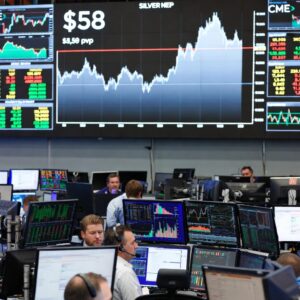
Gold & silver can sense another financial crisis is brewing, as the monetary metals are soaring to record highs on unprecedented demand. Gold & silver aren’t waiting for the SCOTUS decision. They’re breaking out NOW, ahead of the decision that could break the markets.
For now, the rest of the markets hold their breath, but Costco’s suit reminds us: In trade wars, no one wins—especially when the bill comes due.