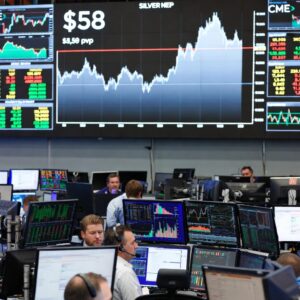
It’s December, 2025. Gold prices are trading above $4,200/oz, silver is closing in on $60, unemployment is skyrocketing, Federal Funds Rate is 3.75-4%, & uncertainty over Trump’s tariffs plagues the market.
President Trump has been at war with current Fed Chairman Jerome Powell since before he even stepped foot back into office, demanding Powell cut interest rates, & attempting to strong-arm him out the door prior to his term ending in May, 2026.
Enter Kevin Hassett, President Donald Trump’s longtime economic advisor and current director of the National Economic Council. As rumors solidify into a near-certainty—with prediction markets like Kalshi pegging his odds at 85% for the Federal Reserve chairmanship—investors are now bracing for turbulence. Hassett’s nomination, set to replace Jerome Powell in May 2026 (if not sooner), promises aggressive rate cuts aligned with Trump’s growth-at-all-costs agenda.
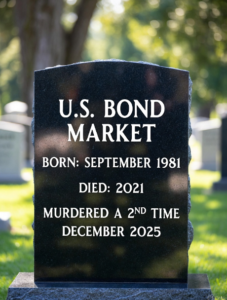
But while short-term yields may dip, the long-term fallout could devastate the U.S. bond market and propel gold & silver to unprecedented heights.
Hassett, a former Council of Economic Advisers chair under Trump, has long championed lower interest rates to juice economic expansion, even amid lingering inflation above the Fed’s 2% target.
His vocal criticism of Powell’s “too late” hikes and alignment with Trump’s demands for cheaper borrowing costs paint him as a dovish wildcard. Bond investors, sensing the risk, have already sounded alarms. In private talks with the U.S. Treasury, major Wall Street players—from asset managers to big banks—warned that Hassett’s appointment could trigger “indiscriminate rate cuts” to appease the White House, potentially reigniting inflation and shattering the Fed’s credibility.
One market veteran likened the peril to the UK’s 2022 bond meltdown under Liz Truss, where unfettered fiscal stimulus sparked a yield spike and forced emergency interventions.
“No one wants to get Truss-ed,” quipped a participant in those Treasury huddles.
The mechanics are straightforward yet brutal. Short-term Treasury yields have already softened on expectations of deeper cuts—futures now price in a 90% chance of a quarter-point reduction at the Fed’s December 9-10 meeting, with more to follow in 2026.
This eases immediate borrowing for consumers and businesses, but it masks a deeper rot. If markets doubt the Fed’s resolve to tame inflation—especially with Trump’s tariff threats and $2 trillion deficits looming—long-term yields could surge as an “inflation risk premium” embeds itself.
Veteran Fed whisperer Jon Hilsenrath notes that current 10-year yields near 4% are “exceptionally low” given the backdrop; a loss of faith could send them “soaring violently,” crushing bond prices and hiking mortgage rates.
The result? A “bond vigilante” revolt, where investors dump Treasuries en masse, amplifying volatility and potentially killing the market’s role as a safe-haven anchor.
Enter the precious metals rally. Gold and silver thrive in such chaos, serving as hedges against currency debasement and fiat uncertainty.
Hassett’s shadow looms large: Since Bloomberg’s November report naming him the frontrunner, gold has climbed to six-week highs above $4,200 per ounce, while silver shattered records at $59.655—up a staggering 101% year-to-date.
Lower real rates under a dovish Fed slash the opportunity cost of holding non-yielding assets, drawing in ETF inflows that hit 15.7 million ounces for silver in November alone. A weakening dollar—already slipping on rate-cut bets—further fuels the fire, as foreign investors pile into bullion for currency protection.
Analysts now eye $65 for silver and $4,381 for gold in the near term, with the gold-silver ratio plunging below key supports, signaling silver’s outperformance. Hassett’s ascent underscores a broader tension: Trump’s vision of a Fed as an economic accelerator versus the market’s demand for an impartial referee.
While stocks may cheer the liquidity boost, the bond market’s fragility could cascade into higher volatility across assets. For now, precious metals shine brightest, a glittering rebuke to fiat’s frailties.
As Trump teases an “early” 2026 announcement, one thing is clear: The Fed’s next chapter won’t be boring—and it might just rewrite the rules of risk.