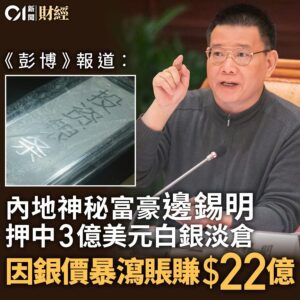
In the volatile world of commodities trading, silver has long been a battleground for bulls and bears. The ongoing silver bull market, driven by industrial demand, inflation hedges, and geopolitical tensions, has seen dramatic price swings. Recently, attention has turned to Chinese billionaire trader Bian Ximing, whose aggressive short position on the Shanghai Futures Exchange (SHFE) has sparked controversy.
By limiting or freezing such naked short positions—shorts taken without sufficient hedging or collateral to cover potential squeezes—regulators can prevent a short-selling induced crash, ensuring the bull market’s momentum isn’t derailed by predatory trading tactics.
Let’s break down how this plays out.
The Background: Bian Ximing’s Bold Bet Against Silver Bian Ximing, a reclusive trader who made billions riding gold’s rally since 2022, pivoted to silver in late January 2026. As silver prices hit all-time highs in Shanghai, topping $100 per ounce amid a frenzy of retail and institutional buying, Bian ramped up his shorts.The SHFE, under regulatory oversight, can impose position limits or force unwinds if a trader’s holdings threaten market integrity. In Bian’s case, the intervention comes as part of a broader effort to “contain price distortions” and curb the “extreme volatility” fueled by speculative shorts.
- Reducing Artificial Selling Pressure: Massive shorts create a wall of sell orders, depressing prices unnaturally. Freezing positions forces shorts to cover (buy back) at current levels, providing buying support and stabilizing the market. This prevents a cascade where falling prices trigger more liquidations.
- Avoiding Short Squeezes in Reverse: In a bull market, rising prices can squeeze shorts, but if positions are oversized and unhedged, the ensuing cover-buying can be chaotic. However, if shorts are allowed to build unchecked post-leg-up, they can orchestrate a controlled dump. Regulatory freezes disrupt this, ensuring shorts can’t dominate liquidity.
- Protecting Retail Investors: The recent fund halts highlight how premiums and volatility hurt small players.
- By curbing speculative giants like Bian, regulators maintain fair access, preventing crashes that wipe out gains from the bull run.
- Encouraging Balanced Trading: Position limits and interventions signal that extreme bets won’t be tolerated, deterring copycat shorts. This fosters a healthier market where prices reflect fundamentals, not manipulation.
FactorWithout InterventionWith Freeze/InterventionSelling PressureHigh, leading to rapid declinesLimited, stabilizing pricesMarket VolatilityAmplified by liquidationsReduced through controlled unwindsInvestor ProtectionLow, retail bears bruntHigh, curbs excessesBull Market SustainabilityThreatened by crashesSupported for further gainsThe Broader Implications for the Silver Bull
China’s role in silver trading is pivotal, with the SHFE influencing global prices. Regulators’ proactive stance—echoed in past curbs on commodities like iron ore—shows a commitment to stability amid Asia’s growing precious metals frenzy.
For silver bulls, this means the next leg up, potentially triggered by renewed industrial buying or dollar weakness, won’t be sabotaged (at least in Chinese markets) by unchecked short selling. Bian’s frozen position serves as a cautionary tale: in a regulated market, aggressive bears risk not just losses but enforced neutrality.The revelation of Bian’s position itself appears to be a calculated move by Chinese regulators, who likely facilitated the leak to Bloomberg through anonymous sources close to the exchange.
This public exposure serves as a stark message and warning to Bian and any other traders contemplating similar naked short positions in the future, emphasizing that outsized bets disrupting market stability will not go unnoticed or unpunished.A parallel can be drawn to the case of Jack Ma, the Alibaba founder who faced swift regulatory backlash after publicly criticizing financial overseers in 2020; authorities halted Ant Group’s massive IPO, imposed hefty fines on his empire, and prompted Ma’s extended retreat from the spotlight. Just as that episode signaled to China’s tech moguls the limits of their influence, the strategic disclosure of Bian’s silver short underscores regulators’ intolerance for speculative plays that could undermine the broader economic agenda, particularly in strategic commodities like silver.
As silver rebounds from its recent dip, traders should watch SHFE volumes and regulatory announcements closely. The bull market’s resilience, bolstered by these safeguards, positions silver for sustained growth rather than boom-bust cycles.
In the end, China’s move Thursday night in freezing out the shorts could be the key to unlocking silver’s true potential.