This is a breakdown of an excellent TS Lombard report followed by a very important contextual description about EXACTLY WHY INFLATION IS GOING TO KEEP GOING UP.
We consider that part Must Read.
Enjoy
Contents
- US Trend Inflation Is 3%
- Core Services Become the Center of the Story
- Deglobalization Changes the Inflation Equation
- Tariffs, Energy, and the Fed
- Analysis: The Fed’s Traditional Inflation Toolkit is Failing
US Trend Inflation Is 3%
Submitted by GoldFix
Something appears to be changing beneath the surface of U.S. inflation, and TS Lombard argues the shift is becoming structural rather than cyclical.
While headline inflation continues to fluctuate with energy and commodity prices, the report contends the more important development is the persistence of core services inflation near 3%, even after one of the most aggressive Federal Reserve tightening cycles in decades. The implication is straightforward: the inflation regime that defined the post-2008 era may no longer apply. Or as we asserted in 2023, it no longer applies at all.
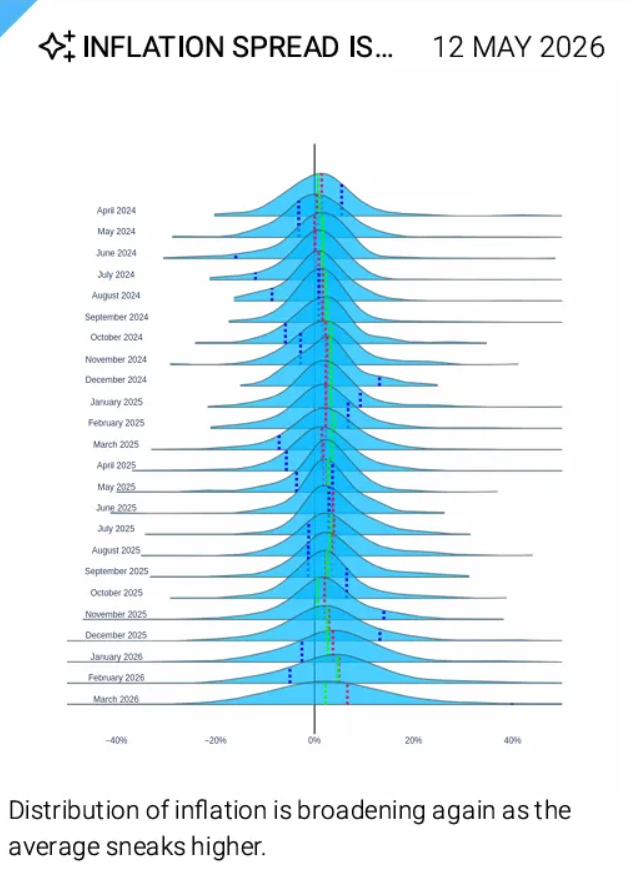
According to TS Lombard analysts Freya Beamish and Alexandros Xenofontos, the combination of deglobalization, tighter labor supply dynamics, tariff pass-through, and geopolitical commodity pressures is creating an environment where inflation settles structurally higher than the 2010s norm. Rather than returning cleanly to the Fed’s 2% target, the report argues the economy increasingly resembles a world where 3% inflation becomes the new equilibrium.
“The labour market give no indication that core services inflation is settling back towards 2%.”
Core Services Become the Center of the Story
The report places heavy emphasis on core services inflation, particularly services excluding shelter, transportation, medical care, and energy. TS Lombard views this category as the clearest signal of underlying domestic inflation pressure because it is heavily tied to wages and labor market tightness rather than external commodity volatility.
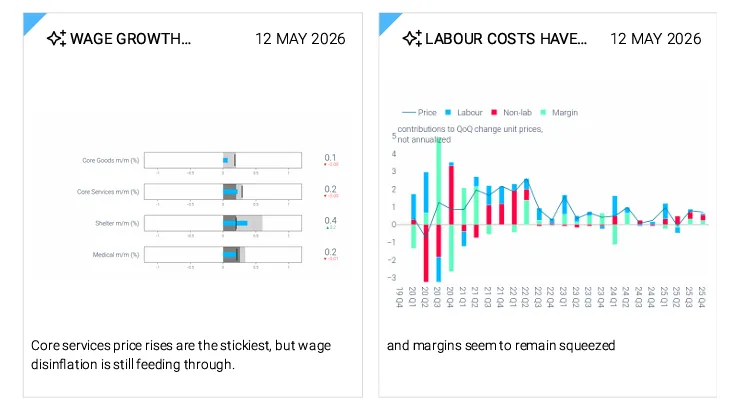
The analysts argue wage growth is no longer decelerating cleanly. Lower immigration flows, demographic constraints, and resilient labor demand are beginning to stabilize wage pressures again after the cooling seen in 2024 and early 2025. Charts throughout the report suggest first-quartile wage growth may already be bottoming while aggregate payroll measures remain firm.
At the same time, firms appear increasingly willing to pass higher labor and input costs through to consumers. TS Lombard argues this reflects a broader shift away from the hyper-globalized economic model that previously suppressed pricing power for decades. In their framework, domestic cost structures matter more today because supply chains are becoming less globally optimized and more politically constrained.
Deglobalization Changes the Inflation Equation
One of the report’s central themes is that deglobalization is widening the relationship between labor costs and CPI inflation. In simpler terms, companies are finding it easier to raise prices relative to underlying wage growth than they could during the globalization era.
Before Covid, cheaper imports, efficient supply chains, and China’s role in global manufacturing acted as major disinflationary forces. TS Lombard argues many of those offsets have weakened. The report specifically notes that declining import penetration outside of AI-related products means domestic costs increasingly dominate pricing behavior.
“Ongoing de-globalisation and shifts in supply chains will leave core goods price inflation higher in the post-Covid cycle than in the 2010s.”
The result is an economy where inflation becomes less sensitive to traditional disinflationary forces. Even areas expected to cool aggressively, including core goods and shelter, are no longer behaving consistently with the old regime.
Free Posts To Your Mailbox